

Introduction to Access Control Systems
The transition from mechanical keys to electronic access control represents more than just a technological upgrade—it fundamentally transforms how organizations manage security. With electronic systems, you can instantly grant or revoke access privileges, monitor entry and exit patterns, integrate with other security systems, and maintain detailed audit trails for compliance purposes. For businesses in Downers Grove's competitive commercial landscape, this level of control and oversight has become not just desirable but essential.
Modern access control technology offers unprecedented flexibility in how you secure your property. A single employee can be granted access to certain areas during specific hours while being restricted from others. Temporary credentials can be issued to contractors or visitors without compromising permanent security infrastructure. When security concerns arise, you can immediately deactivate compromised credentials without the expensive and time-consuming process of rekeying mechanical locks. These capabilities make access control systems an invaluable investment for any organization serious about security.
The Latest in Card Access Control Systems

The card reader technology powering today's access control solutions has evolved dramatically from the simple magnetic stripe systems of decades past. Contemporary systems utilize sophisticated encryption, anti-cloning measures, and multi-factor authentication to deliver security that adapts to emerging threats. Our installations feature the latest proximity cards, smart cards, and mobile credential options that provide robust security while maintaining user convenience.
Proximity cards and fob devices use radio frequency identification (RFID) technology to communicate with readers without physical contact. This contactless approach reduces wear on credentials and readers while speeding up the authentication process. Smart card technology takes this further by incorporating encrypted microprocessors that can store additional data, execute security protocols, and even integrate with payment systems or employee identification databases. For organizations requiring the highest security standards, we implement multi-technology readers that can verify multiple credential types simultaneously.
The integration of mobile credentials represents the cutting edge of access control technology. Employees can use their smartphones as secure keys, eliminating the need for separate cards or fobs. This approach leverages Bluetooth Low Energy (BLE) or Near Field Communication (NFC) technology to provide secure, convenient access while reducing credential management overhead. Mobile credentials offer additional benefits including remote provisioning, automatic updates, and the ability to integrate with other smartphone-based business applications.
Biometric access control systems provide the ultimate in security by verifying identity based on unique physical characteristics. Fingerprint readers, facial recognition systems, iris scanners, and palm vein readers ensure that credentials cannot be shared, lost, or stolen. Our biometric installations frequently combine these physiological factors with knowledge factors (PIN codes) or possession factors (cards or fobs) to create multi-factor authentication systems that meet the most stringent security requirements. For sensitive areas like data centers, pharmaceutical storage, or financial operations, biometric verification provides unparalleled assurance that only authorized individuals gain entry.
Our Access Control Systems Process
Our systematic approach to access control implementation ensures that every installation meets your security objectives while remaining scalable and manageable. We begin every project with a comprehensive security assessment that examines your facility's unique vulnerabilities, traffic patterns, and operational requirements. This initial consultation allows us to understand not just your current needs but also how your security requirements might evolve as your organization grows.
During the assessment phase, our experienced technicians conduct a thorough site survey, examining entry points, evaluating existing infrastructure, and identifying potential security gaps. We analyze foot traffic patterns, departmental access requirements, and integration needs with existing systems like video surveillance, alarm systems, or building management platforms. This holistic evaluation ensures that our recommendations address your complete security ecosystem rather than merely installing isolated access points.
The design phase transforms assessment findings into a comprehensive system architecture tailored to your needs. We select appropriate hardware components—including card readers, control panels, electric strikes, magnetic locks, and credential types—that balance security requirements with budget considerations and user experience. Our designs account for power requirements, network infrastructure, backup systems, and compliance with relevant building codes and accessibility regulations. We present detailed proposals that clearly explain system functionality, user workflows, and management capabilities.
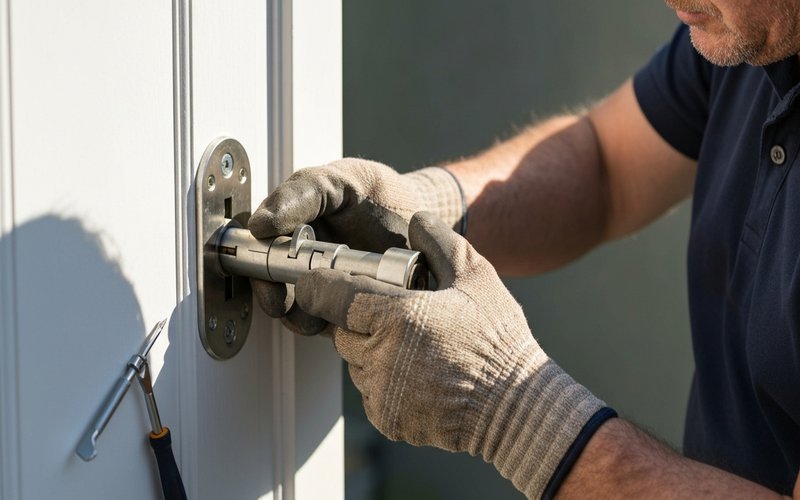
During installation, our certified technicians execute the implementation with minimal disruption to your operations. We coordinate scheduling to avoid peak business hours, maintain clean work areas, and ensure that security is never compromised during the transition. Installation includes mounting and wiring readers, installing locking hardware, configuring control panels, establishing network connections, and conducting comprehensive system testing. We verify that every component functions correctly, integrates properly with related systems, and meets our exacting quality standards.
The programming and configuration phase establishes the intelligence behind your access control system. We create user accounts, define access levels, set time schedules, configure alarm responses, and establish reporting protocols according to your security policies. This phase includes extensive testing with various credential types and access scenarios to ensure the system responds appropriately to both authorized and unauthorized access attempts. We also configure backup and redundancy measures to ensure continuous operation even during power outages or network disruptions.
Finally, we provide comprehensive training for administrators and end users. Administrative training covers credential management, report generation, system monitoring, troubleshooting procedures, and how to respond to security events. User training ensures that employees understand how to use their credentials properly, recognize abnormal system behavior, and follow security protocols. We also provide detailed documentation, including system diagrams, configuration settings, and operational procedures that serve as ongoing reference materials.
Types of Access Control Services We Offer
Our access control expertise spans the full spectrum of security applications, from simple single-door installations to enterprise-wide systems managing hundreds of access points across multiple locations. Commercial access control installations protect offices, retail establishments, warehouses, and professional facilities throughout Downers Grove. These systems typically combine key card or fob credentials with scheduled access rules that accommodate business hours, employee shift patterns, and after-hours access for authorized personnel.
Multi-tenant building access control addresses the unique challenges of properties housing multiple businesses or residential units. These systems maintain strict separation between tenants while allowing property managers centralized oversight. Common area access, parking garage entry, elevator control, and amenity space reservations can all be managed through a unified platform. We implement solutions that allow individual tenants to manage their own spaces while maintaining building-wide security standards.
Healthcare facility access control meets the stringent security and compliance requirements of medical environments. These specialized systems integrate with patient privacy protocols, control access to medication storage areas, secure medical records rooms, and manage credentials for staff, patients, and visitors. Our healthcare installations often incorporate biometric verification for areas handling controlled substances or sensitive patient information, ensuring compliance with HIPAA and other healthcare regulations.
Educational institution access control protects students, faculty, and staff while accommodating the complex access patterns typical of schools, colleges, and universities. These systems manage classroom access, secure administrative areas, control entry during and after school hours, and enable lockdown protocols during emergencies. We implement solutions that integrate with student and faculty ID systems, allowing a single credential to serve multiple purposes from building access to library services to meal plan management.
Industrial and manufacturing access control secures production facilities, warehouses, and distribution centers while supporting operational efficiency. These robust systems withstand harsh environmental conditions, integrate with time and attendance tracking, control access to hazardous areas, and manage contractor access. We install solutions that accommodate the high-traffic volume typical of shift changes while maintaining security for restricted areas containing proprietary processes or valuable inventory.
Government and municipal facility access control meets elevated security standards required for public buildings, law enforcement facilities, and critical infrastructure. These systems often incorporate multiple verification factors, provide detailed audit trails for compliance purposes, integrate with background check databases, and support emergency protocols. Our government installations frequently include biometric readers, anti-tailgating measures, and integration with surveillance systems for comprehensive security monitoring.
Data center and server room access control provides maximum security for facilities housing critical IT infrastructure. These specialized installations typically employ biometric verification, mantrap configurations that prevent tailgating, environmental monitoring integration, and granular access logging that documents every entry and exit. We implement multi-factor authentication combining what users know (PIN codes), what they have (key cards or fobs), and who they are (biometric features) to ensure absolute verification.
Office intercom and door entry systems provide convenient yet secure visitor management at building entrances. These systems allow employees to remotely verify visitor identity through audio or video communication before granting entry. Modern IP-based intercoms integrate with access control platforms, smartphone apps, and video surveillance to provide comprehensive entry point management. We install solutions ranging from simple audio intercoms to sophisticated video systems with recording capabilities and integration with reception desk management software.
Why Choose Downers Grove Chicago Locksmith for Access Control Systems
Our commitment to access control excellence stems from decades of security experience serving the Downers Grove business community. Unlike generalist contractors or newer entrants to the security market, we bring specialized locksmith expertise combined with advanced electronic security knowledge. This unique combination ensures that both the mechanical and electronic components of your access control system are installed correctly, function reliably, and integrate seamlessly with your existing security infrastructure.
We maintain manufacturer certifications with leading access control system manufacturers, ensuring that our technicians receive ongoing training on the latest technologies, best practices, and troubleshooting techniques. These certifications also ensure warranty compliance and provide access to technical support resources that non-certified installers cannot access. When you choose our services, you benefit from professional relationships with manufacturers that result in better equipment pricing, priority support, and early access to new technologies.
Our local presence at 6509 Powell St, Downers Grove, IL 60516 means that we understand the specific security challenges facing businesses in our community. We're familiar with local building codes, work regularly with area contractors and property managers, and can provide rapid response when you need support. Unlike national chains with distant call centers, you'll work with local professionals who take personal pride in protecting our community's businesses.
The quality of our installations reflects our commitment to excellence in every detail. We don't simply mount equipment and move on—we ensure that every component is properly secured, all wiring is neatly organized and protected, and the finished installation maintains the aesthetic character of your facility. Our attention to detail extends to thoroughly testing every possible use case, from normal operations to power failure scenarios, ensuring that your system performs reliably under all conditions.
We provide comprehensive ongoing support that extends well beyond initial installation. As your security needs evolve, we're available to add users, reprogram access schedules, integrate additional doors or facilities, and upgrade system capabilities. Our maintenance programs keep your system operating optimally through regular inspections, firmware updates, and preventive maintenance that addresses issues before they become security vulnerabilities.
Our vendor-neutral approach means we recommend systems based on your needs rather than pushing particular product lines. We work with multiple manufacturers and can design solutions using the best components for your specific application. Whether you need a straightforward standalone system for a single location or a networked enterprise platform managing thousands of credentials, we'll recommend the approach that delivers optimal value and functionality.
Common Situations Requiring Access Control Systems
Businesses throughout Downers Grove turn to access control systems when facing a variety of security challenges and operational needs. Employee turnover creates one of the most common scenarios requiring better access management. Traditional key-based security becomes problematic when employees leave, as unreturned keys create potential security vulnerabilities. With access control, departing employee credentials are simply deactivated, immediately eliminating their access without expensive rekeying.
Business growth frequently outpaces the capabilities of traditional lock and key systems. As organizations expand their workforce, manage multiple shifts, or open additional locations, the complexity of key management becomes overwhelming. Access control systems scale effortlessly, accommodating hundreds or thousands of users with individualized access privileges that would be impossible to manage with mechanical keys. Companies experiencing rapid growth find that access control systems actually simplify security management while enhancing protection.
Security incidents or breaches often serve as wake-up calls that prompt organizations to upgrade their access control capabilities. Whether following a break-in, theft, or unauthorized access incident, businesses recognize that they lack visibility into who accesses their facilities and when. Modern access control systems provide detailed audit trails that document every entry attempt, creating accountability and providing valuable information for incident investigation and prevention.
Compliance requirements in regulated industries frequently mandate access control systems with specific capabilities. Healthcare facilities must demonstrate compliance with patient privacy regulations, financial institutions face requirements for securing sensitive data, and manufacturers of controlled substances need detailed access documentation. Our systems generate the audit trails, access reports, and security documentation that satisfies regulatory requirements while simplifying compliance management.
After-hours access management challenges affect many businesses that need to accommodate employees, contractors, or cleaning crews outside normal business hours. Traditional approaches involving extra keys, meeting employees to let them in, or leaving facilities unlocked all create security concerns. Access control systems allow you to grant time-limited access that automatically activates and expires according to schedules, eliminating security vulnerabilities while providing necessary flexibility.
Multi-site management becomes dramatically simpler with networked access control systems. Organizations with multiple locations throughout the Downers Grove area or beyond can manage all facilities from a central platform. Employees who work at multiple sites can use the same credential everywhere, and administrators gain unified visibility across the entire organization. This centralized management reduces administrative overhead while ensuring consistent security standards.
Visitor management needs drive many organizations toward access control solutions that integrate guest registration, temporary credential issuance, and escort requirements. Rather than providing visitors with keys that might not be returned or allowing unrestricted access to sensitive areas, modern systems issue time-limited credentials that automatically expire and can restrict visitors to appropriate areas. Integration with video intercoms and lobby management systems creates a comprehensive visitor experience that balances hospitality with security.
Layered security requirements for protecting high-value assets or sensitive information typically require access control systems with graduated verification. Organizations might provide general employees with key card access to common areas while requiring biometric verification for server rooms, executive offices, or research facilities. This layered approach ensures that security measures scale appropriately with the sensitivity of protected areas.
Downtown Downers Grove Commercial Lock Solutions
The vibrant downtown Downers Grove business district presents unique access control challenges due to historic building constraints, high foot traffic volumes, and diverse tenant needs. Our experience working throughout downtown has taught us how to integrate modern access control technology with historic architecture, accommodate buildings with unusual door configurations, and design systems that support the energetic customer traffic typical of retail and hospitality environments while maintaining security.
Many downtown buildings feature multiple tenants sharing common entrances, stairways, and corridors. Our multi-tenant access control solutions allow each business to maintain independent security while building owners preserve aesthetic consistency and centralized oversight. We implement systems using elegant card readers that complement historic architecture rather than detracting from it, and we coordinate installations to minimize disruption to neighboring businesses and customer traffic.
Retail establishments in downtown Downers Grove benefit from access control systems that secure back-of-house areas while maintaining welcoming customer-facing spaces. Our solutions control employee access to stockrooms, offices, and cash handling areas while allowing unrestricted public access to sales floors. Time-scheduled access rules automatically unlock employee entrances before opening and secure them after hours, eliminating the operational burden of manual locking while ensuring consistent security.
Restaurants and hospitality venues face unique challenges balancing security with the constant flow of staff, deliveries, and customers. Our access control installations secure manager offices, alcohol storage, and food preparation areas while allowing necessary access for different staff roles. Integration with point-of-sale systems and employee time tracking creates operational efficiency while maintaining detailed accountability for sensitive areas.
Office Intercom and Door Entry Systems
Modern office environments demand sophisticated visitor management that maintains security without sacrificing the professional image that welcoming guests creates. Our office intercom and door entry systems transform building entrances into managed security checkpoints that verify visitor identity, maintain entry logs, and alert employees when guests arrive. These systems range from simple audio intercoms to advanced video platforms with smartphone integration and recording capabilities.
IP-based video intercoms represent the current standard for professional office environments, offering high-definition video quality, network-based operation, and integration with access control platforms and surveillance systems. Employees can verify visitor identity from desk phones, computers, or smartphones before remotely granting entry. The system captures and stores images of all visitors, creating a visual audit trail that supplements traditional access logs.
For multi-tenant office buildings, we implement directory-based intercom systems that allow visitors to look up and call tenants from a building entrance station. These systems eliminate the security vulnerabilities of unsecured building entrances while maintaining convenience for visitors. Integration with individual tenant access control systems ensures that visitors gain entry only to appropriate areas, maintaining separation between tenants.
Wireless intercom solutions address the unique needs of facilities where traditional wiring would be impractical or aesthetically undesirable. These systems utilize building network infrastructure or cellular connections to provide full intercom functionality without extensive construction. For historic buildings or temporary installations, wireless approaches provide complete capabilities while minimizing alterations to existing structures.
Service Areas
Downers Grove Chicago Locksmith proudly serves businesses and commercial facilities throughout Downers Grove and the surrounding Chicagoland communities. Our convenient location at 6509 Powell St, Downers Grove, IL 60516 positions us to provide rapid response throughout DuPage County and neighboring areas. We maintain deep familiarity with local building codes, regularly work with area property managers and contractors, and take pride in protecting our community's businesses.
Our service area encompasses downtown Downers Grove's thriving business district, the extensive commercial developments along Ogden Avenue and Butterfield Road, industrial parks in the southern portion of town, and office complexes throughout the area. We also serve neighboring communities including Westmont, Woodridge, Lisle, Lombard, Darien, and Hinsdale, bringing the same expertise and service excellence to businesses throughout the western suburbs.
For organizations with multiple locations across the greater Chicago metropolitan area, we provide coordinated installations and ongoing support that ensures consistent security standards and centralized management capabilities. Our relationships with leading access control manufacturers and experience with large-scale deployments allow us to serve as your single point of contact for access control needs throughout the region.
Understanding Advanced Security Technologies
The question of what locks locksmiths cannot open relates directly to the broader discussion of security effectiveness. While skilled locksmiths can defeat most traditional mechanical locks given sufficient time and proper tools, modern access control systems employing biometric verification present fundamentally different challenges. A fingerprint or facial recognition system cannot be picked, bumped, or impressioned using traditional locksmith techniques—the physical characteristics being verified simply cannot be replicated with mechanical tools.
This distinction highlights why organizations with serious security requirements increasingly choose biometric access control over traditional locks. The physical security of the lock mechanism becomes secondary to the authentication method. Even if an intruder somehow defeated the electric strike or magnetic lock, the access control system logs the unauthorized entry, triggers alarms, and maintains a detailed record of the security breach. This layered approach—combining sophisticated authentication with physical security and comprehensive monitoring—represents the current best practice for protecting valuable assets and sensitive areas.
The old tip about putting a rubber band on a doorknob relates to creating a temporary latch-holding mechanism, but this household trick has no relevance to properly installed access control systems. Modern electric strikes and magnetic locks are specifically designed to resist tampering and defeat attempts using improvised tools or techniques. The access control system continuously monitors lock status, detecting and alerting security personnel to any attempts at unauthorized entry or manipulation. This active monitoring eliminates vulnerabilities that might exist with unmonitored mechanical locks.
When considering what constitutes the hardest door lock to pick, the answer increasingly points toward locks integrated with electronic access control systems rather than purely mechanical locks. While high-security mechanical cylinders with complex pin arrangements, sidebars, and pick-resistant features certainly provide excellent protection, they remain vulnerable to skilled attackers given sufficient time. Access control systems that combine strong mechanical locks with electronic verification, continuous monitoring, and automatic alerting provide comprehensive security that adapts to threats rather than simply resisting them. The hardest lock to defeat isn't necessarily the most complex mechanism—it's the system that combines multiple security layers, actively monitors for threats, and maintains detailed accountability for all access attempts.
Maintenance and Ongoing Support
Access control systems require periodic maintenance to ensure reliable long-term operation. Our comprehensive maintenance programs include regular inspections of card readers, door hardware, control panels, and power supplies. We test backup batteries, verify communication with central servers, update firmware to address security vulnerabilities, and clean readers to maintain optimal performance. Preventive maintenance identifies and addresses minor issues before they become security problems or operational disruptions.
Software updates represent a critical aspect of access control maintenance that's often overlooked. As security researchers identify new vulnerabilities and manufacturers develop enhanced features, keeping your system current protects against emerging threats while providing access to improved capabilities. Our maintenance programs include monitoring for and implementing software updates, ensuring that your investment continues providing optimal protection.
We also provide credential management services that simplify ongoing administration. As your workforce changes, we can handle the logistics of issuing new credentials, deactivating former employees, updating access permissions, and managing lost or stolen cards or fobs. For organizations without dedicated security personnel, outsourcing these administrative tasks ensures consistent security practices while freeing internal staff to focus on core business activities.
System expansion and upgrades become simple with our ongoing support relationships. As your business grows, adds locations, or identifies new security requirements, we seamlessly integrate additional access points, upgrade system capacity, or implement new technologies. Our detailed documentation of existing systems and familiarity with your security practices allow us to execute expansions efficiently without disrupting operations.
Emergency Services and Support
Security systems must function reliably every day, but equipment failures, power outages, and security incidents occasionally require immediate professional assistance. We provide emergency support for access control system malfunctions that compromise security or prevent authorized access. Whether you're dealing with a failed card reader preventing employees from entering, a control panel malfunction affecting multiple doors, or a suspected security breach requiring immediate investigation, our technicians respond quickly to restore normal operations.
Our emergency services include temporary security measures when equipment failure leaves your facility vulnerable. We can implement interim solutions while permanent repairs are completed, ensuring continuous protection. Our familiarity with multiple system types allows us to work with equipment installed by other companies, though we encourage organizations to establish service relationships with us before emergencies arise for fastest possible response.
For critical facilities that cannot tolerate any access control downtime, we offer priority service agreements guaranteeing response within specific timeframes. These agreements include regular preventive maintenance, priority parts inventory, and dedicated technical support that minimizes system downtime. Organizations with 24/7 operations, high-value assets, or strict compliance requirements find that priority service agreements provide valuable peace of mind and protection against operational disruptions.
Integration with Complete Security Systems
Access control systems achieve maximum effectiveness when integrated with complementary security technologies. We design and implement unified security platforms that combine access control with video surveillance, intrusion detection, visitor management, and monitoring services. Integration allows these systems to work together intelligently—for example, when a card reader detects an unauthorized access attempt, surveillance cameras automatically focus on the door while guards receive immediate alerts with live video.
Video surveillance integration provides visual verification of access events, allowing security personnel to confirm that the person using a credential is actually the authorized cardholder. This addresses the vulnerability of shared or stolen credentials while providing valuable forensic information when investigating security incidents. Modern systems use video analytics to detect suspicious behaviors like tailgating, loitering, or unusual traffic patterns that might indicate security concerns.
Intrusion detection integration ensures comprehensive protection during non-business hours. The access control system can automatically arm and disarm intrusion sensors based on facility occupancy, eliminating the operational burden and errors associated with manual arming. If someone enters through a door secured by access control while the intrusion system is armed, security personnel immediately know that a serious security breach is occurring.
Building automation integration enhances both security and operational efficiency. Access control systems can trigger appropriate lighting, HVAC adjustments, and other building systems based on occupancy patterns. Energy savings result from conditioning only occupied areas, while security benefits from automated responses to unusual access patterns. For example, when the last employee exits for the day, the access control system can verify that all interior doors are secured, arm the intrusion system, adjust building systems to unoccupied mode, and alert security if any abnormalities are detected.
Contact Downers Grove Chicago Locksmith
Protecting your business with advanced access control technology starts with a conversation about your specific security needs and objectives. Our team at Downers Grove Chicago Locksmith brings decades of combined experience designing and implementing access control solutions for businesses throughout the Downers Grove area. We invite you to contact us for a comprehensive security assessment and detailed proposal tailored to your facility's unique requirements.
Call us at (630) 796-7023 to discuss your access control needs or schedule a consultation. Our experienced professionals will answer your questions, explain available options, and help